Working with Military
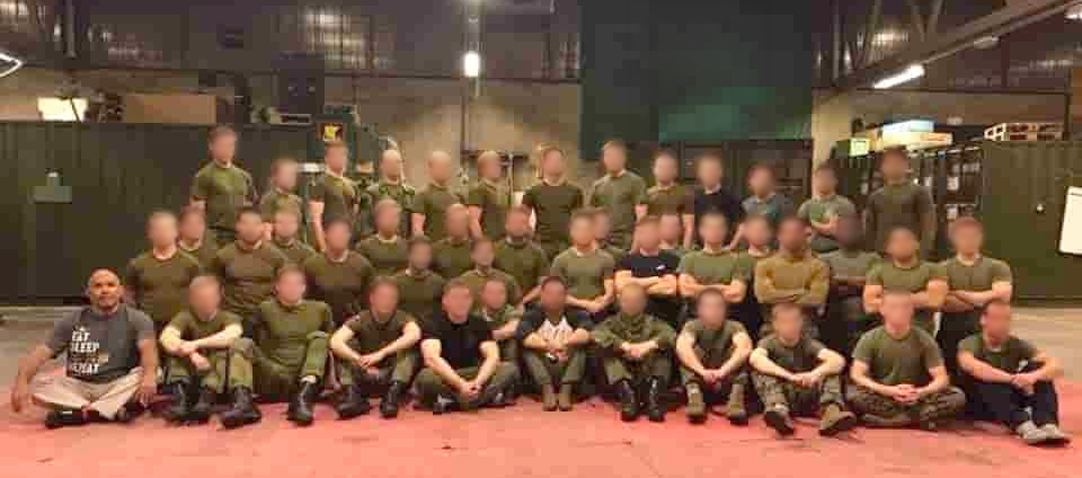
Here I am with a group of military personnel after our five-hours of training together
In this article, I'd like to share a glimpse of how I work with the military. I do so from two perspectives:
- Individuals — at the location of their choosing
- Groups — at military locations
Individuals
When someone contacts me by phone or email, I chat with them and ask, “How can I help?” We talk about various things and then decide whether we're a good fit. Let me give you an example.
A member of the Spec Ops community contacted me and asked about a specific kind of training he was looking for. We talked at length before he agreed to meet with me.
NOTE: How did I know who this guy was and whether or not he was who he said he was? Simple. He was introduced to me by someone I knew in the community. I write this because it's important to know I don't teach such things to civilians
When we met, he had a few more questions for me. He also wanted to experience what we had been talking about. So, I obliged and gave him a firsthand experience—without causing too much injury.
After the demonstration, he said he was sold and wanted to begin a deep dive into the topic we had discussed.
A few months later, at the end of our time together, I asked him for feedback. He told me he had learned a lot and thoroughly enjoyed the training. He also said, “My only regret is not finding you sooner.”
Groups
I was once called upon to work with a foreign military group. But before I had the opportunity to train them, I was interviewed by two of their commanding officers—a Major and a Lieutenant Colonel.
The Major began his line of questioning by showing me a technique taught to him by a previous instructor they had hired. He asked if I was familiar with it and what my thoughts were.
I told him I was familiar with the technique but wasn't a fan of it—especially for military personnel.
When he asked why, I replied, “Because punching someone in the face doesn't usually end events where the stakes are high and weaponry is involved.”
He smiled and nodded his head.
The Lieutenant Colonel then began his line of questioning by asking me:
“Do you believe our troops should spar during their training?”
I responded, “It depends. What kind of sparring are we talking about? I ask because many people are only aware of one or two sparring methods.”
The Lieutenant Colonel looked at me and said, “I'm not sure what you're talking about.”
So, I explained that there are numerous ways to spar. Then I gave him a demonstration because there was a Captain present whom I had heard had kickboxing experience.
The Captain and I sparred for about 60 seconds in a small office without injuring each other. He attempted to strike my face, body, and legs—without gloves—and I demonstrated a very different approach to sparring.
The Lieutenant Colonel was surprised.
I also explained that the way many military personnel are taught to spar can be unnecessarily injurious and may even cause missions to be aborted.
The Major commented, “I like the way you speak. Please continue!”
Our conversation continued for another hour.
Finally, I was invited to train their personnel. The focus of the training was CQB and another very fun topic. Near the end of the training, the Major and Lieutenant Colonel came down to observe.
Spontaneously, I grabbed the Major and pretended to spar with him. He grabbed my neck and pretended to throw an elbow at my face. I acted surprised, chuckled, and then gave him a BIG HUG!
If you or your group would be interested in working with me, email me at the address below, and let's chat.
Thank you for your time,
Roy
Phone: 1-98-98-HARRIS
Email: roy@royharris.com